Skip to content

Free written estimatesLocal crews

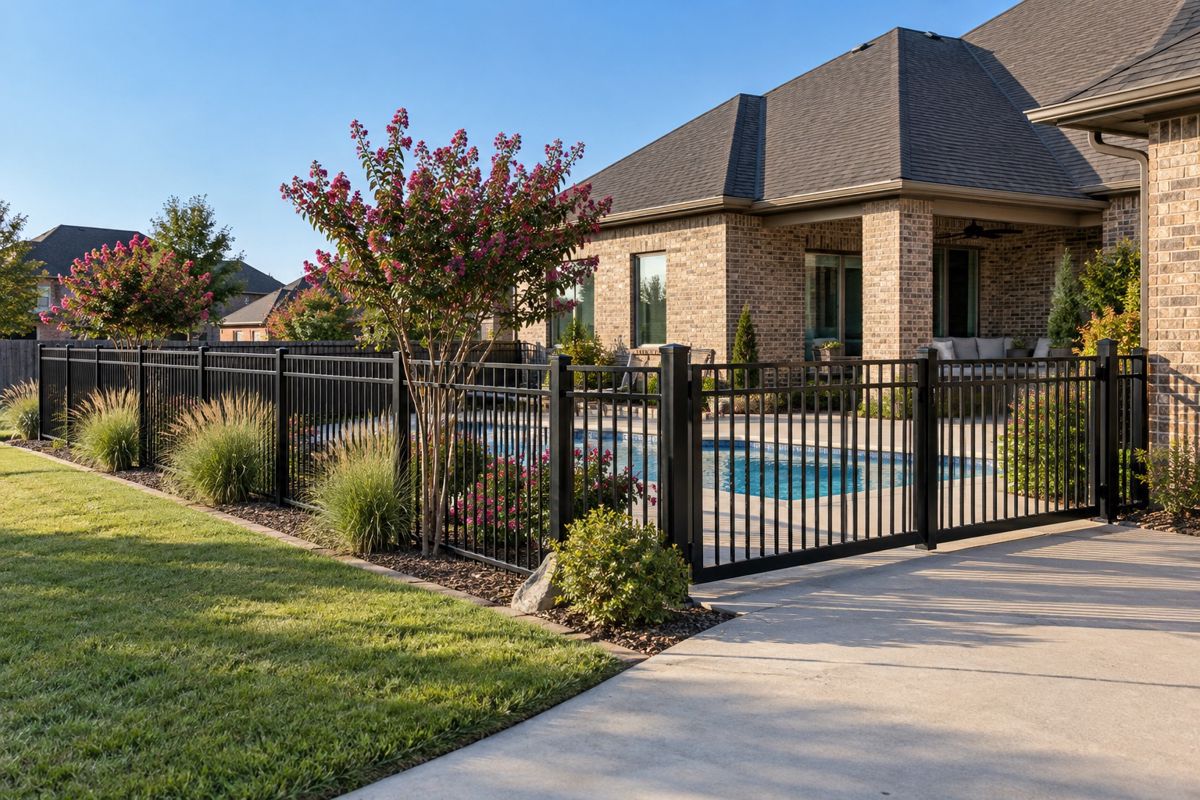
Black aluminum fence and gate around a pool area at a brick home

Aluminum and ornamental iron

Aluminum fence installation in Wichita with an open look

Slim, strong fencing for front yards, pools and garden edges. We help you choose between aluminum and ornamental iron.

  • Powder-coated aluminum that will not rust through
  • Ornamental iron styles for a heavier look
  • Pool and HOA rules talked through early

Step 1 of 3

What do you need?

Why choose aluminum or ornamental iron fencing in Wichita?

These fences are for owners who want a clean edge without blocking the view. They suit front yards, corner lots, garden borders and pool areas. In Wichita, many newer subdivisions with retention ponds, parks or greenbelts allow open fencing where a solid fence is not welcome.

Aluminum is light, does not rust through and holds a powder-coated finish for a long time. It is usually the easier choice for homes. Ornamental iron, which is often made from steel, feels heavier and can be built in more detailed designs. It needs more attention to the finish, because rust can start where the coating is scratched.

Open fences do not give privacy. If that is the goal, look at wood fencing or vinyl fencing instead.

What are the differences between aluminum and iron?

Both come as panels that are fastened between posts. The choice depends on the look, the budget and how you plan to use the fence.

Aluminum

Aluminum panels are lighter and easier to install. The finish does not rust, which is a plus in a place with big swings in moisture. It is a good fit for pool fences and for owners who want a low-maintenance look.

Ornamental iron

Iron is stronger and heavier. It can hold a tall, detailed design and is harder to bend. It usually costs more and needs touch-ups when the finish chips. Look closely at the paint or coating system in the quote.

Styles

Flat top, spear top and decorative picket styles are all common. Panels can be stepped or racked to follow a slope, and gates can match the fence line.

What about pool fences and HOA rules?

Many places require a barrier around a swimming pool, and aluminum is a popular way to meet that rule. Requirements usually cover the height, the gap between pickets, and gates that close and latch by themselves. Rules vary by city and county, so check with the permit office in your area before you buy anything.

HOAs often have their own rules for front yards and the sides of a lot. Some allow only black or bronze finishes, and some set a maximum height. Others ask you to submit a drawing. Do not order materials until you have approval in writing.

We can describe the fence in plain terms for your request, including height, style, finish and gate type. We do not give legal advice, and your city or HOA has the final say.

Material and design come first. Iron usually costs more than aluminum, and a decorative top costs more than a flat one. Taller panels and heavier rails raise the price too.

The shape of the lot matters. A straight run is simple. A lot with many corners, steps or a steep slope needs more posts and more custom cuts. Pool barrier gates with self-closing hinges and latches cost more than a basic walk gate. Drive gates are quoted separately, and if you want an opener, see our gate automation page.

Finally, site conditions such as clay soil, buried rock or tree roots can slow digging. We measure the line before we write a quote, and we do not give a number sight unseen.

How long does installation take, and when should you call?

Posts are set first and need time to cure. Panels are then fastened in place, and gates are hung and adjusted. A typical home project can take a few days of work, though custom orders may take longer to arrive. Weather also plays a part. We give a schedule with the written quote.

On install day, please clear the line, mark any sprinkler heads you know about and tell us where the dogs are. We check each panel for level and gate swing before we leave.

Call when you are building a pool, planning a front yard fence, moving into a new build with a bare lot or looking to replace a tired wood fence with something open. You can start from our Wichita fence company home page.

Free written estimates
Local crews
Clear timelines
Cleanup included

How it works

1

Tell us about the fence

Length, style and goals.

2

Site visit and quote

We measure and put the price in writing.

3

Installation

Posts set properly, gates hung true, site cleaned.

Request aluminum and iron

Tell us what you need and we call you back.

No obligation.

Step 1 of 3

What do you need?

Questions about fencing in Wichita

Does aluminum fencing rust?

Aluminum does not rust the way steel does. It can still show surface wear, and a scratch through the coating can leave a mark. Powder-coated finishes are meant to last, but they are not indestructible. Wash the fence now and then, and touch up chips with a paint made for the finish. Ask for the finish details in your quote.

Is aluminum or ornamental iron better for a pool?

Both can meet pool barrier rules when built correctly. Aluminum is lighter, will not rust through and is common for pools. Iron is heavier and stronger, but needs finish upkeep. The key points are height, picket spacing and self-closing, self-latching gates. Check your city rules first, and we can help describe the fence you need.

Can aluminum fencing follow a slope?

Yes. Panels can be racked, which means they tilt to follow gentle slopes, or stepped for steeper ground. Not every style racks the same amount, so tell us about your lot early. Parts of Wichita are flat and others have gentle slopes toward creeks and drainage areas, and we check the grade when we measure.

Will an open fence keep my dog in?

It can, but the picket spacing matters. Some styles have gaps wide enough for a small dog to squeeze through. Tell us the size and breed, and we can look at closer picket spacing or a puppy picket option. Gate latches and the gap at the bottom should be planned with the dog in mind.

How does an open fence handle Kansas wind?

Very well, since wind passes through the pickets instead of pushing on a solid surface. That means posts see less load than they do with a privacy fence. Posts still need to be set deep and straight, and clay soil still moves. A properly built open fence usually stays true through storm season.

Ready when you are

Call now or request a quote online.

(316) 555-0177