
Skip to content

Free written estimatesLocal crews

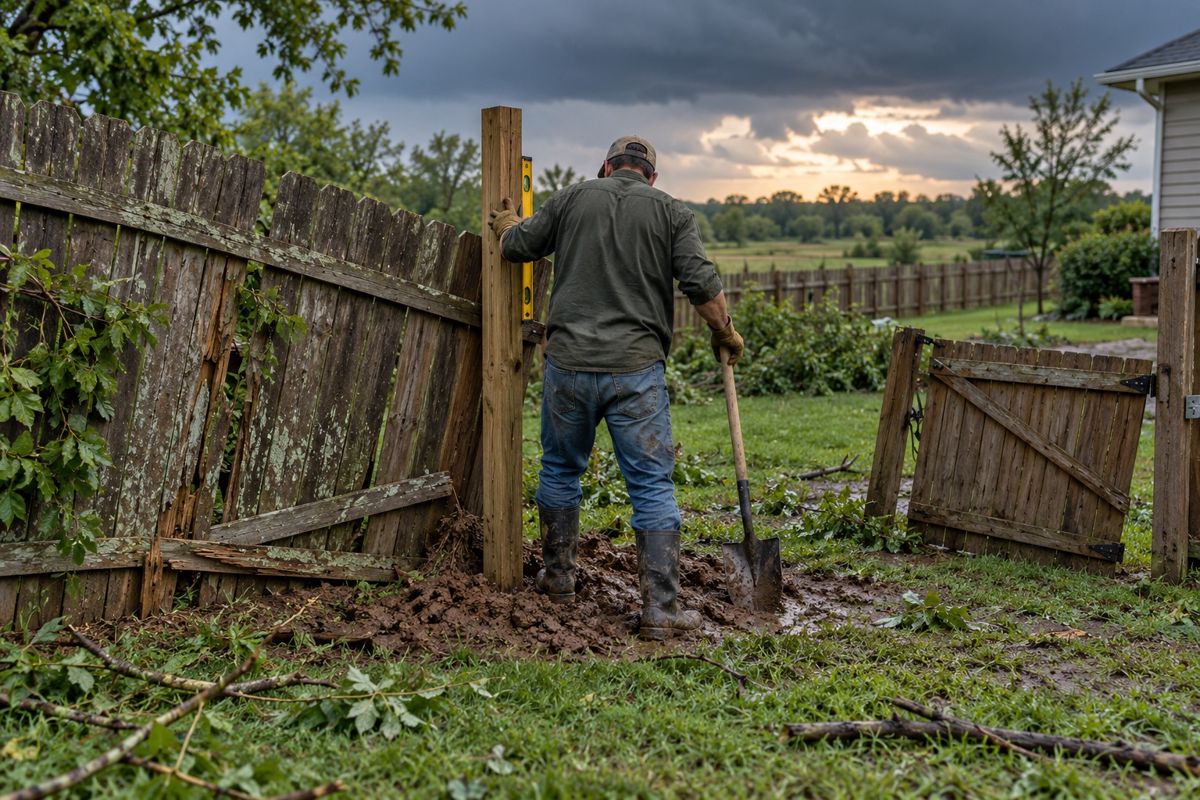
Worker resetting a leaning fence post and fixing a sagging gate after a storm

Fence and gate repair

Fence repair in Wichita after wind, hail and age

Leaning posts, broken panels, sagging gates and automatic openers. We look at the fence and tell you whether to repair or replace.

  • Posts, panels, rails and gates
  • Straight advice on repair versus replace
  • Gate automation questions answered

Step 1 of 3

What do you need?

What kinds of fence repair do we handle in Wichita?

Most fence repair calls in Wichita come from the same few problems. Wind pushes a section over. A post rots at the base. A gate drags on the ground. A tree limb falls on the line. An older fence simply wears out one board at a time.

  • Leaning or loose posts that need to be reset or replaced.
  • Broken rails, pickets, boards or panels.
  • Sagging gates, bad hinges and latches that no longer catch.
  • Storm-damaged sections of wood, vinyl, chain link, aluminum or iron fence.
  • Gaps under a fence where dogs dig or water has washed out the soil.

A small repair is sometimes the right call. At other times, patching a fence that is mostly worn out wastes money. We will tell you which one we think fits, and show you why.

Should you repair the fence or replace it?

A good rule is to look at the posts first. If most of the posts are solid, a repair is usually worth it. If many posts are rotten, loose or leaning, new boards will not fix the problem, and a replacement may cost less over time.

Repair makes sense when

  • Damage is limited to a few boards, a panel or one section.
  • The posts are sound and the line is straight.
  • The fence is otherwise in decent shape.

Replacement makes sense when

  • Many posts are rotten or have shifted.
  • Repairs keep coming back every season.
  • You want a different material, such as vinyl or new wood.

We give you the numbers for both so you can choose.

What happens after a Wichita storm?

Spring in Kansas can bring hail, straight-line wind and heavy rain, and fences often take the hit. Clay soil soaked by a downpour loosens its hold on posts, and a strong gust does the rest. You may see a whole section lean at once.

First, stay clear of downed power lines and leaning sections. Take photos of the damage before anything is moved. If you think the damage may be covered, call your insurer about a claim and read your policy for deductibles. We do not give insurance advice, but we can describe the damage and the repair in writing.

Temporary bracing can keep a fence upright until the repair. Do not pour concrete or stack heavy items against a leaning fence. That makes it harder to fix and can cause injury.

Gates fail more often than fences, because they move. Sagging is the most common problem. It comes from a post that has shifted, hinges that are too light, or a gate frame that has flexed. Sometimes the fix is a new brace or hinge. Sometimes the post needs to be reset.

Gate automation adds an opener to a swing or slide gate. It can be controlled by a remote, a keypad or a phone. A good setup includes safety sensors, a way to open the gate by hand if power fails and a strong gate that already swings freely. An opener cannot fix a gate that drags.

Many HOAs and cities have rules on drive gates, fire access and entry systems, so check before you plan one. We talk through what is needed for power, the gate size and how you want to use it before we write a quote.

What changes the price, and when should you call?

For repairs, the price depends on how many posts and sections are affected, what material the fence is made of and whether matching parts can be found. Older vinyl and ornamental iron styles can be harder to match. Access, soil and weather also change the work.

Gate work depends on the gate size, the condition of the posts and, for automation, the type of opener, the power supply and the safety features.

Timing depends on the job and our schedule, and we do not promise a response time. We do give you a written quote and a plan for the work. Call when a fence leans, a gate will not close, or storm damage leaves your yard open. Start from our Wichita fence company home page.

Free written estimates
Local crews
Clear timelines
Cleanup included

How it works

1

Tell us about the fence

Length, style and goals.

2

Site visit and quote

We measure and put the price in writing.

3

Installation

Posts set properly, gates hung true, site cleaned.

Request fence and gate repair

Tell us what you need and we call you back.

No obligation.

Step 1 of 3

What do you need?

Questions about fencing in Wichita

Can a leaning fence be fixed without replacing it?

Often, if the posts are sound. A leaning post can sometimes be pulled upright and braced, or reset in new concrete. If the base has rotted, the post needs to be replaced. We look at the post below ground and at the soil to decide, and we tell you if repair will not last.

Why does my gate keep sagging?

Usually the post has shifted, the hinges are too light or the frame has flexed under its own weight. In Wichita, clay soil that swells and shrinks can move gate posts over time. A diagonal brace or a stronger hinge may help, but a reset post is sometimes the only lasting fix.

Can you add an automatic opener to my existing gate?

Sometimes. The gate must swing or slide freely, the posts must be solid, and there must be a way to supply power, such as a nearby outlet or a solar kit. A heavy or sagging gate may need repair first. We look at the gate and the site before we say whether an opener makes sense.

Do you repair vinyl and aluminum fences too?

We handle repairs on wood, vinyl, chain link, aluminum and iron fences. Matching parts is the hard part with vinyl and ornamental styles, since manufacturers change colors and profiles. If an exact match is not available, we will talk through other options with you, such as replacing a longer run or using a close substitute.

What should I do first after storm damage?

Keep people and pets away from leaning sections and downed lines. Take photos from several angles before anything is moved. If a claim may apply, contact your insurer and read your policy. Then call us for a look at the fence and a written quote. Do not start major repairs before your insurer has a chance to respond.

Ready when you are. Call now or request a quote online.