
Skip to content

Free written estimatesLocal crews

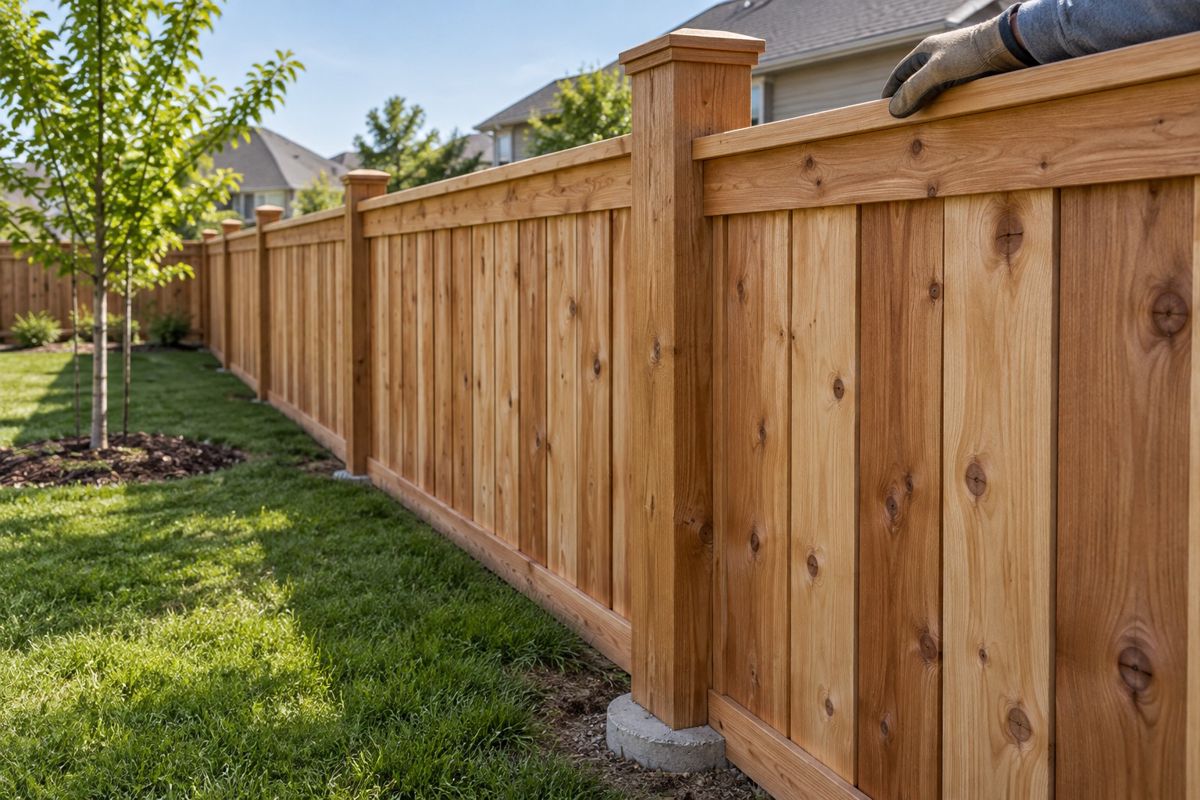
Fresh cedar privacy fence with cap rail along a Kansas back yard

Wood privacy fences

Wood fence installation in Wichita for private backyards

Cedar and pine privacy fences built for plains wind and clay soil. We explain the choices and quote in writing.

  • Privacy, board-on-board and shadow box styles
  • Posts set for wind and clay soil
  • Gates and old fence removal quoted with the job

Step 1 of 3

What do you need?

What does wood fence installation in Wichita involve?

Wood fence installation in Wichita starts with the line, not the lumber. We confirm where the fence will sit, mark the post spots and check for underground lines before anything is dug. Then the work moves in a set order.

  1. Remove the old fence if there is one, and clear the line.
  2. Dig post holes, set the posts in concrete and let them cure.
  3. Hang the rails, then attach the pickets or boards.
  4. Build and hang gates, and add a cap or trim if the design calls for it.
  5. Haul away scrap and leave the yard tidy.

A privacy fence is usually six feet tall, and six feet is a common limit for back yards. Front yard limits are usually lower, and rules vary by city and subdivision, so check before you plan a tall fence near the street. If you are still weighing materials, our vinyl fencing page covers the low-upkeep option.

Which wood is right for a Wichita yard?

Most wood fences in this area are either cedar or pressure-treated pine. Both can work well when they are built and cared for properly.

Cedar

Cedar costs more up front. It resists rot and insects naturally and tends to stay straighter than pine. It weathers to a soft gray if you leave it alone, or it can be stained to hold its color.

Pressure-treated pine

Pine is the budget choice. It is treated to resist decay, but it can twist and crack as it dries, especially with hot summers and big swings in humidity. Letting it dry before you stain it, then sealing it, helps a lot.

Either way, the posts matter more than the boards. A good board on a weak post still leans. Ask what grade of post is in the quote and how each one will be set.

What problems do wood fences have in Kansas weather?

Wichita sits in open plains country. Wind is a constant, and spring brings storms that can drop hail or push straight-line winds through a neighborhood. A solid fence acts like a sail, so it needs to be built for that load.

  • Wind. Deeper posts, closer post spacing and sturdy rails help. Some owners choose a board-on-board or shadow box style that lets a little air pass through.
  • Clay soil. Much of the area has clay that swells when wet and shrinks when dry. That movement can push posts out of line over time. Gravel at the base of each hole and a sloped concrete collar at the top help water drain away.
  • Rot at the ground. Boards should sit a little above the soil, not buried in it.
  • Sprinkler splash. Water hitting the same boards every day shortens their life. Aim heads away from the fence if you can.

Hail can chip or split boards, but wood is usually easy to patch. See our fence repair page if a storm has already done damage.

We do not quote from a chart. Every yard is different, and the written quote reflects what is on your lot. These are the things that move the number most.

  • Length and height. More feet and taller panels mean more material and more labor.
  • Wood type and style. Cedar costs more than pine. Board-on-board and shadow box styles use more boards than a single-layer picket.
  • Old fence removal. Tearing out and hauling away an old fence adds time.
  • Gates. A walk gate and a wide drive gate are priced separately from the fence line.
  • Site conditions. Slopes, tree roots, rock, tight access and soft ground all slow a crew down.
  • Permits and HOA rules. Some neighborhoods require approved styles or colors.

How long does it take, and what happens on install day?

A typical backyard job often takes a few days of crew time, though the real answer depends on the length, the weather and how fast concrete cures. Rain and frozen ground can push a schedule back. We give a timeline with the quote rather than a promise made over the phone.

On the first day, expect marking, digging and posts. The auger work can be loud. Please move cars, hoses and patio furniture away from the line, and let us know about dogs. Panels and gates usually go up after the posts have set. We clean up as we go and walk the line with you at the end.

When should you call? Call when you want a new privacy fence, when an old one leans after a storm, or before a disagreement over the property line turns into a problem. You can start at our Wichita fence company home page or use the short form.

Free written estimates
Local crews
Clear timelines
Cleanup included

How it works

  1. Tell us about the fence

    Length, style and goals.

  2. Site visit and quote

    We measure and put the price in writing.

  3. Installation

    Posts set properly, gates hung true, site cleaned.

Request wood fencing

Tell us what you need and we call you back.

No obligation.

Step 1 of 3

What do you need?

Questions about fencing in Wichita

How tall can a privacy fence be in Wichita?

Six feet is a common limit for back yards, and front yard fences are usually held lower. Rules differ by city, subdivision and corner lots, so check with your city permit or zoning office and your HOA before you commit to a height. We can talk through what is likely to apply at your address.

Is cedar or pine the better choice?

Cedar costs more but resists rot and insects on its own and tends to stay straighter. Pressure-treated pine costs less and can last a long time when it is sealed and kept dry at the base. If budget is tight, a well-built pine fence is better than a poorly built cedar one. Post quality matters most.

Do I need to call 811 before the fence goes in?

Yes, underground lines should be marked before anyone digs. Kansas has a one-call system you reach by dialing 811, and the locate request is free. Marking takes a few working days, so make the request early. Do not guess where gas, electric, water or communication lines run. We can walk through this with you when we quote.

Should I stain or seal a new wood fence?

Most owners do. A stain or sealer slows moisture damage and sun fading. Pressure-treated pine often needs to dry for a while first, so the wait before staining can be weeks or months depending on the weather. Cedar can be sealed sooner. Ask for the product maker's instructions and plan to refresh the finish every few seasons.

Can you take down my old fence?

Old fence removal can be part of the job. Say so when you ask for a quote so it is priced in. Removal is more work when posts are set in old concrete, so tell us if you know that is the case. We will confirm in the written quote what is being removed and hauled away.

Ready when you are

Call now or request a quote online.

(316) 555-0177