
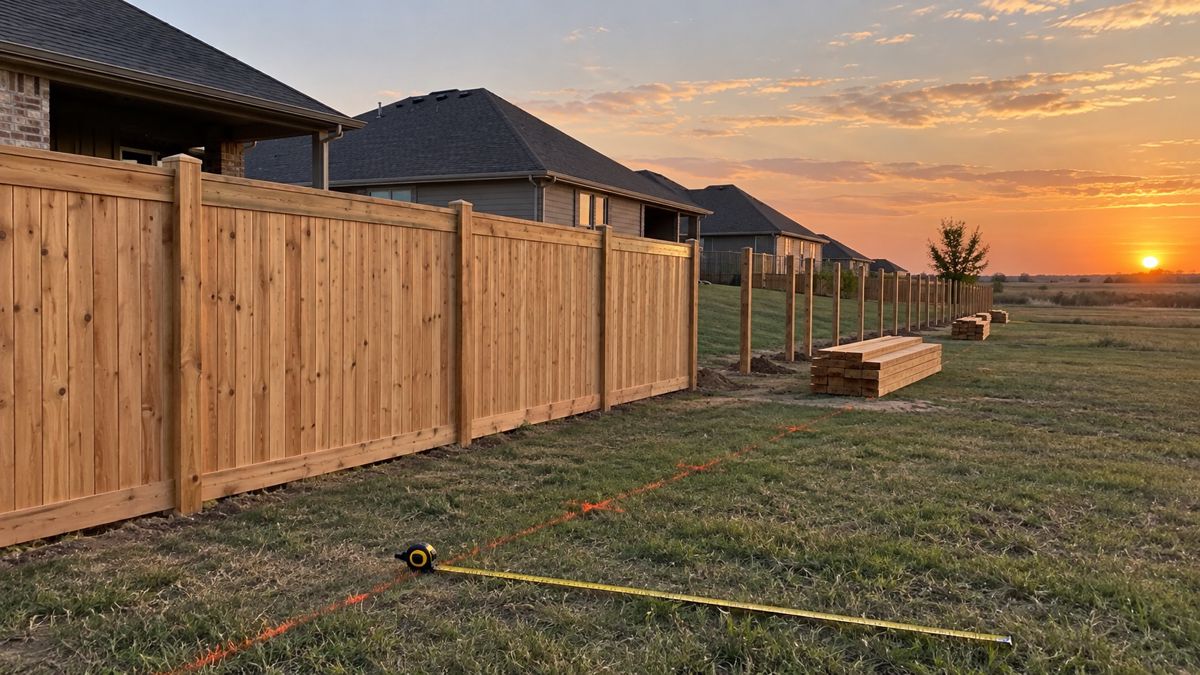
Fence installation in Wichita usually costs somewhere between about $12 and $80 per linear foot, depending mostly on the material, the height and how hard the site is to work on. Those numbers are rough market guides for the United States, not quotes from Wichita Fencing. Kansas prices often sit near the middle of the national range, but your own written quote is the only number that counts.
The rest of this guide explains where the money goes, so you can read a quote and tell whether it makes sense.
What is the typical cost per foot for each fence type?
These are broad, widely used ranges for installed fence in the United States. Treat them as a starting point only.
- Wood (pine or cedar): roughly $20 to $50 per linear foot installed. Pressure-treated pine is at the low end and cedar is toward the top.
- Vinyl: roughly $25 to $60 per linear foot. Reinforced and decorative styles cost more.
- Chain link: roughly $12 to $35 per linear foot. Galvanized is cheapest, coated mesh costs more, and taller security fence costs more again.
- Aluminum: roughly $25 to $65 per linear foot, with pool-barrier styles toward the upper end.
- Ornamental iron: roughly $30 to $80 per linear foot or more, depending on design and finish.
As an illustration of the math only, a plain 150 foot back yard run at $20 to $45 per foot would land between $3,000 and $6,750 before gates, removal of an old fence or any extras.
What makes a fence quote go up or down?
Material is the biggest factor, but it is not the only one. When two quotes for the same fence differ a lot, the gap usually comes from one of these items.
- Total length. Every extra foot adds posts, rails and labor. Corners add posts too.
- Height. A six foot fence uses more material than a four foot one and needs stronger posts.
- Style. Board-on-board and shadow box wood styles use more lumber than a plain picket. Decorative aluminum tops cost more than flat ones.
- Old fence removal. Tearing out and hauling away posts set in old concrete takes time.
- Site conditions. Slopes, tree roots, buried rock, tight access and soft ground all slow the crew.
- Gates. A walk gate and a wide drive gate are priced apart from the fence line.
Why do wind and clay soil affect the price in Wichita?
Wichita is open plains country. South winds are steady, and spring storms can bring hail and straight-line gusts. A solid privacy fence acts like a sail in that wind, so posts have to be set deep and spaced with care. That means more concrete and more labor than a bare-minimum job.
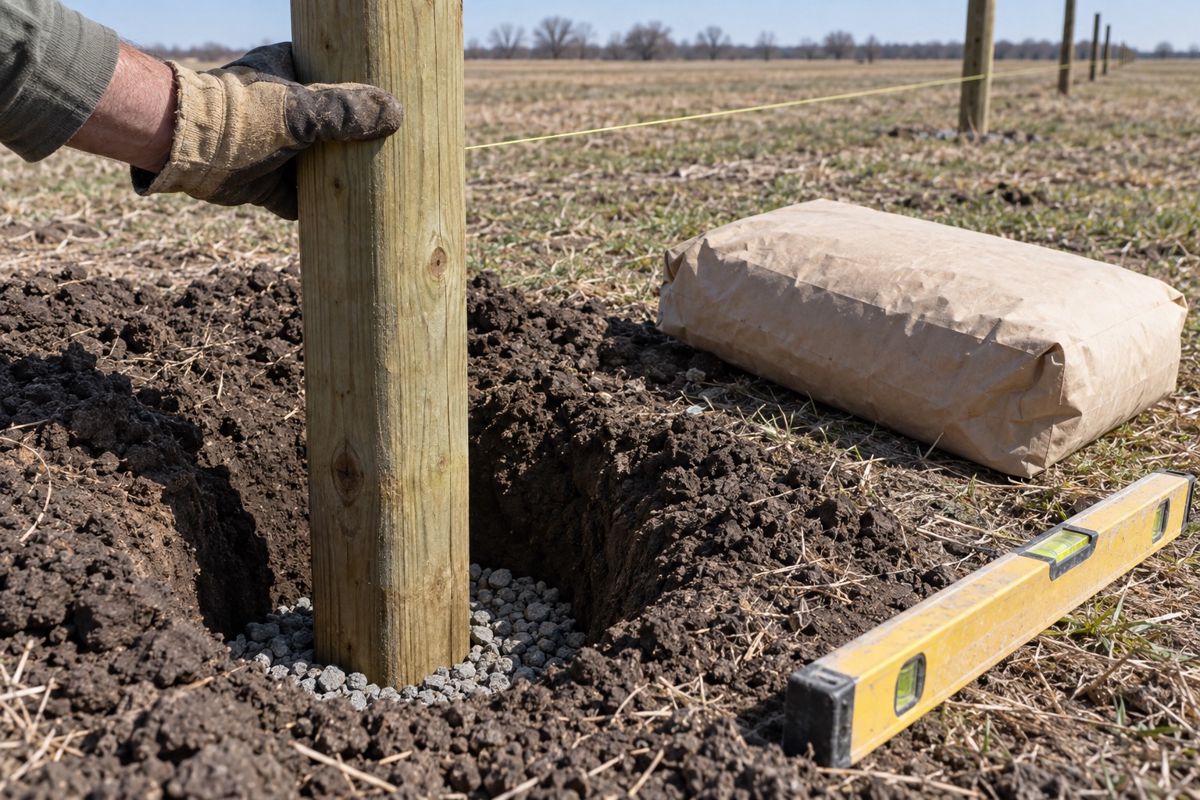
Much of the area also has clay soil that swells when wet and shrinks when dry. Over time that movement can push posts out of line. A good installer sizes the hole to the fence height, puts gravel at the base for drainage and finishes the top of the concrete so water runs away from the post.
A cheap quote that cuts these steps may look good today and cost more in a few seasons. Ask how deep the posts will go, how they are set and how far apart they are. A straight answer is a good sign.
How much do gates and extras add?
Gates add cost because they need heavier posts, hinges and latches, and they have to swing freely. A basic walk gate is a smaller add than a wide drive gate. Automatic openers cost more again, since they need power, safety sensors and a sturdy gate frame.
Other extras that change the total include:
- Post caps and trim.
- Staining or sealing for wood.
- Privacy slats for chain link.
- Special colors for vinyl or aluminum.
- Extra posts for a lot with many corners.
Ask for each of these as a separate line, so you can see what the base fence costs and what the extras add.
How do permits, HOA rules and property lines affect cost?
Rules vary by city, county and neighborhood, so check before you buy. Some places require a permit for certain fences or heights, and many HOAs set limits on style, color and height. Front yard fences are often held to a lower height than back yard fences.
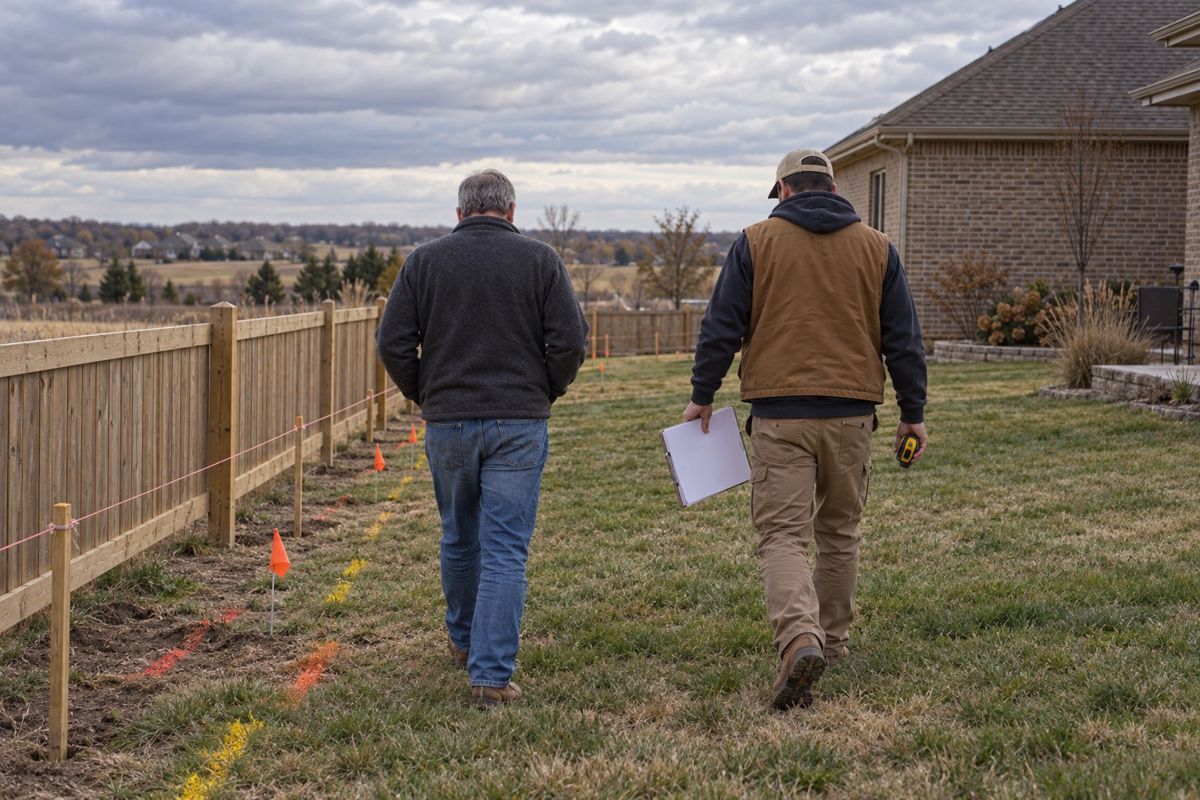
Property lines matter too. If you are not sure where your line runs, a survey can help and may be worth the cost. Building on the wrong side of a line can mean taking the fence down later. If the fence is shared with a neighbor, talk to them early.
Before any digging, request a locate by calling 811 so underground utility lines are marked. Do not guess where they run.
How can you compare fence quotes fairly?
Quotes only compare well when they describe the same job. Use this short list.
- Ask each contractor to list the material, height, style and total length.
- Check post size, spacing and depth, since that is where cheap quotes often save money.
- Confirm what is included, such as old fence removal, haul-away and gates.
- Ask who handles permits and HOA requests.
- Ask to see a contractor's license and insurance where your city requires them, and ask for them in writing.
- Get the scope in writing before work starts.
What is a sensible next step?
If you know the material you want, the page for that fence gives a closer look at the work, the timeline and what changes the price. See wood fence installation, vinyl fencing or aluminum and iron fencing. If you already have a fence that needs work, our fence repair page explains how we decide between a repair and a replacement.
You can also call us or use the short form for a written quote on your own lot. We measure, talk through the options and put the numbers in writing before any work starts.